

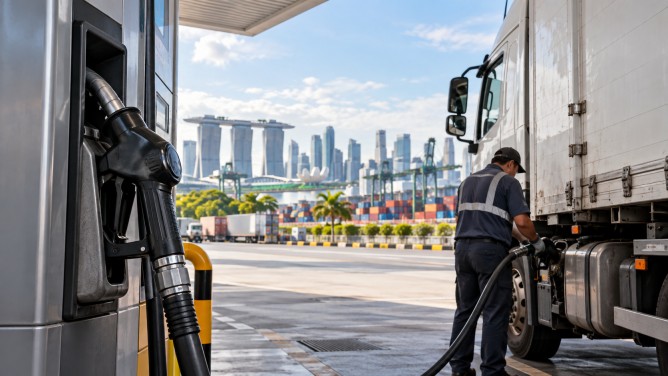
In recent months, Singapore has experienced a significant rise in diesel prices, sparking concerns about the impact on transportation and logistics costs that could eventually trickle down to consumers and businesses. As of September 16, gasoil prices surged to approximately US$210 per barrel, a notable increase from US$111.75 per barrel on June 26. By September 22, retail diesel prices climbed to around S$4.07 per litre, though this remains below the year’s earlier peak of S$4.68.
This price hike is attributed to a series of global disruptions, including restricted shipping routes through the Strait of Hormuz, the ongoing Russia-Ukraine conflict, and targeted attacks on oil infrastructure. These factors have collectively contributed to tighter global fuel supplies, leading to volatility in the diesel market.
Singapore’s extensive reliance on imports and its robust logistics and transportation networks mean that increased diesel costs could significantly impact various sectors. Freight operators, manufacturers, retailers, and food businesses are likely to face rising expenses, which may lead to adjustments in delivery operations or the introduction of fuel surcharges to offset the cost.
For road freight and last-mile delivery companies, where fuel constitutes a substantial portion of operating expenses, these increases represent a direct challenge. Smaller businesses, with limited profit margins, might initially absorb some of these costs, but the eventual effect could be higher consumer prices for food, retail products, and other imported goods.
Despite some businesses potentially absorbing the initial cost hikes or reducing discounts, the continued reliance on internal combustion engines for most commercial vehicles and buses in Singapore underscores their vulnerability to international fuel market fluctuations. Diesel remains a dominant fuel source within the commercial vehicle fleet, making the industry susceptible to ongoing global tensions and supply disruptions.
Industry experts anticipate that diesel prices will remain under pressure in the near term as global supply chain issues and geopolitical uncertainties persist. This ongoing situation calls for strategic planning and adjustments within the affected sectors to mitigate the financial impact on both businesses and consumers in Singapore.