

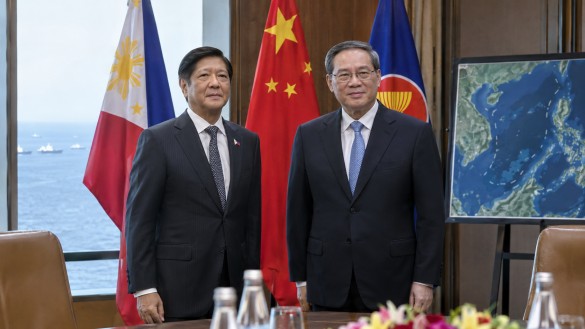
During the 29th ASEAN-China Summit in Manila on November 16, Philippine President Ferdinand Marcos Jr. and Chinese Premier Li Qiang committed to enhancing cooperation between ASEAN and China, celebrating 35 years of dialogue relations and five years of their Comprehensive Strategic Partnership. This agreement comes amid ongoing tensions in the South China Sea, highlighting the importance of respecting international law and maintaining regional stability.
President Marcos emphasized the need for peaceful dispute resolution and noted progress in negotiating a Code of Conduct for the South China Sea. This proposed code aims to prevent maritime incidents and reduce tensions in the contested waters. However, the negotiations remain incomplete, with approximately 80% of the draft provisionally agreed upon. Disagreements persist over the geographical scope, legal status, and key definitions, delaying the finalization of the document, which is not expected to be concluded before the Philippines hands over the ASEAN chairmanship to Singapore in 2027.
Premier Li highlighted the growing economic cooperation between ASEAN and China, revealing that their trade exceeded $1 trillion last year, with two-way investments surpassing $500 billion. This economic partnership was a key topic during the summit, alongside discussions on trade, investment, supply chains, artificial intelligence, technology, healthcare, maritime security, and transnational crime prevention.
Both sides expressed support for expanding economic opportunities and strengthening regional partnerships. Despite the ongoing challenges in finalizing the South China Sea Code of Conduct, the summit underscored a commitment to cooperation, focusing on shared economic interests and regional stability.