

Legal experts are examining questions about diplomatic immunity and international mediation authority that emerged during the Malaysian-led negotiations that ended five days of fighting between Thailand and Cambodia. The conflict, which claimed 36 lives and displaced over 200,000 people, concluded with a ceasefire that raises important precedents for international diplomatic intervention.
The role of Malaysian mediators in facilitating agreements between sovereign nations involved complex legal questions about the authority of third-party negotiators and the binding nature of mediated agreements. International law provides limited guidance on the enforcement mechanisms for such diplomatic interventions.
Both Acting Thai Prime Minister Phumtham Wechayachai and Cambodian Prime Minister Hun Manet accepted Malaysian mediation voluntarily, but legal scholars debate whether the resulting agreements have the same status as bilateral treaties negotiated directly between the parties.
The involvement of the United States in applying pressure for peaceful resolution added another layer of complexity to the diplomatic process. Questions arise about when international intervention in territorial disputes becomes legally justified and what obligations result from such involvement.
The ceasefire agreement includes provisions for ongoing diplomatic consultation, but the legal framework for enforcing compliance remains unclear. Continued fighting near Samraong demonstrates the gap between diplomatic agreements and practical implementation. Military commanders preparing for consultations must operate within unclear legal frameworks, while the cross-border committee meeting in Cambodia on August 4 may need to establish clearer legal foundations for future diplomatic interventions.
Diplomatic Immunity Questions Arise from Thailand-Cambodia Conflict Mediation
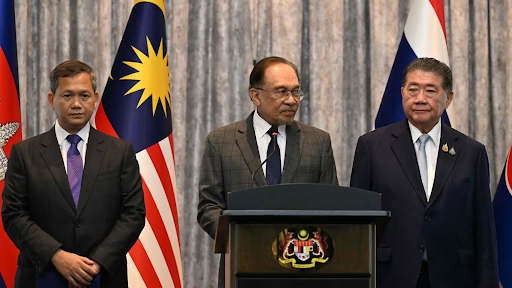
Picture Credit: www.heute.at
110
