

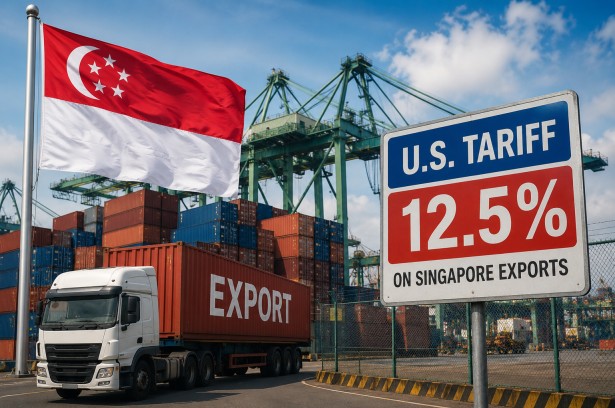
The United States has introduced a new tariff of 12.5% on approximately one-third of Singapore’s domestic exports, a move justified by concerns regarding the enforcement of laws against forced labour. This decision is part of a wider trade policy impacting numerous global economies. In response, Singapore has firmly denied these allegations, emphasizing its robust legal framework that actively prohibits forced labour practices. The Ministry of Trade and Industry in Singapore has expressed its intention to engage in ongoing discussions with American trade representatives to gain a better understanding of how this tariff will be implemented.
A notable aspect of the tariff policy is its exemptions, which include significant export categories such as pharmaceuticals, semiconductors, certain electronics, aerospace, and energy products. Additionally, goods already subject to specific U.S. tariffs are also excluded from this new measure. As a result, some of Singapore’s critical industries will not be directly affected by the tariff, although concerns remain about the broader implications for trade relations.
Business organizations have expressed apprehension about the possible repercussions of the tariff, warning that it could lead to increased uncertainty for manufacturers and exporters. This comes at a time when the U.S. is conducting a separate investigation that could potentially result in further trade restrictions. The situation has prompted industry leaders to encourage businesses to explore diversification in their export markets and to enhance the resilience of their supply chains in anticipation of possible challenges.
The introduction of this tariff reflects a complex landscape in international trade, where economic policies are increasingly influenced by human rights considerations. As the U.S. seeks to address forced labour concerns globally, its actions have significant implications for trade partners. Singapore’s continued dialogue with U.S. officials will be crucial in navigating this evolving scenario, aiming to mitigate any negative impacts while adhering to international trade norms and ethical standards.