

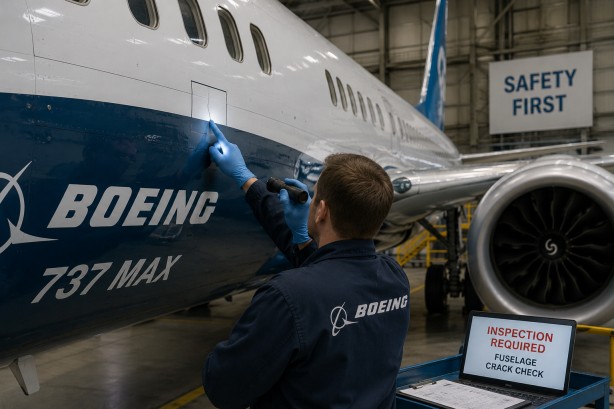
U.S. aviation authorities have mandated that operators of Boeing 737 Max jets conduct inspections for potential cracks in a critical structural part of the fuselage. This directive will impact around 471 aircraft, with inspections set to commence in September. The focus is on a component called the bear strap, which consists of structural sheets that support the fuselage around the exit doors. This move comes after similar fractures were previously found in older Boeing 737 Next Generation models, leading to inspections of those aircraft.
While the 737 Max fleet has not yet reported any such cracks, regulators have noted that the aircraft shares a similar design and manufacturing process with the older models, raising concerns that the same issue might eventually surface. Authorities have cautioned that undetected cracks could compromise a vital structural element, potentially threatening the aircraft’s overall integrity.
Boeing has stated that it has been collaborating with airlines on addressing this issue since it was first identified in 2019. The company is in full support of the mandated inspections, which are intended to detect and rectify any problems before they escalate to critical levels. These inspections are part of ongoing vigilance over the 737 Max, which has been under intense scrutiny following past safety incidents.
The 737 Max was previously grounded worldwide after two tragic crashes occurred in 2018 and 2019, prompting widespread concerns about the aircraft’s manufacturing and engineering quality. The latest inspections add another layer to the continuing oversight efforts aimed at ensuring the safety and reliability of this aircraft model.