

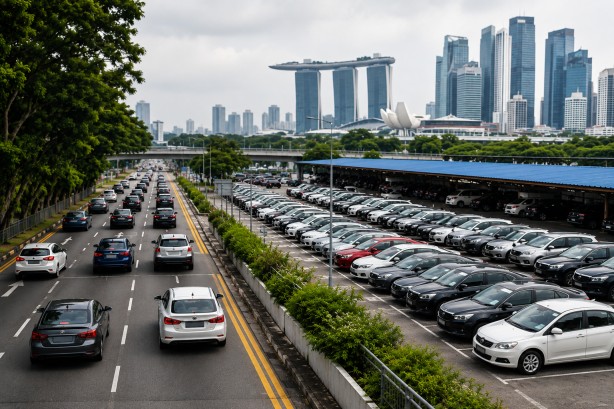
Singapore’s private car numbers have declined to their lowest since 2019, as the increasing costs associated with owning a vehicle push more people toward options like leasing, car-sharing, and ride-hailing services. By the end of June, private cars made up 79% of the total car population in the country, a decrease from 82.5% in 2021. Meanwhile, rental vehicles have surged, now representing a record 14.9% of the market.
This shift in vehicle ownership trends is largely attributed to the consistently high prices of Certificates of Entitlement (COE). These premiums are a mandatory requirement for car ownership in Singapore, contributing significantly to the overall cost and making it more difficult for individuals to afford their own vehicles.
In response to this changing landscape, leasing companies are expanding their fleets to meet the growing demand for rental cars. This trend indicates a notable preference among residents for flexible and cost-effective transportation alternatives, as they seek to manage and reduce their monthly expenses.
Additionally, many Singaporeans are turning to the country’s robust public transport network and shared mobility services as viable options to circumvent the financial burden of car ownership. This shift not only alleviates individual financial pressures but also aligns with broader environmental and traffic management goals by potentially reducing the number of cars on the road.
As a result, the transportation industry in Singapore is adapting to these evolving consumer preferences, with more resources being allocated to support the growing popularity of rental and shared transportation services. This dynamic is reshaping the way residents approach their commuting needs, reflecting broader global trends in urban mobility.