

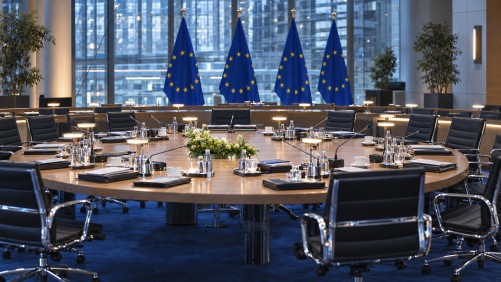
As the European Union grapples with financial planning for its future, European affairs ministers are convening in Brussels to discuss the bloc’s next seven-year budget, spanning 2028 to 2034. Ireland, currently holding the presidency of the Council of the European Union, is tasked with steering these complex negotiations.
The European Commission has put forth a proposal for a €1.9 trillion budget, but this figure is under scrutiny from several member states, including Germany, Denmark, the Netherlands, Sweden, and Austria, who are advocating for reductions. Meanwhile, other countries are keen on safeguarding funds allocated for agriculture and regional cohesion, illustrating the diverse priorities within the EU’s membership.
A significant part of the discussions is centered on how to finance the EU’s budget, especially with the impending need to start repaying post-Covid recovery loans by 2028, which will necessitate annual repayments of approximately €24–€25 billion. To address this, the EU is exploring new revenue streams, such as redirecting carbon-related levies, contributions from large corporations, and taxes on tobacco and electronic waste, potentially generating €44 billion annually according to the European Commission’s estimates.
Additional revenue-raising ideas include taxes on cryptocurrencies and large technology companies, as well as a gambling levy. However, the implementation of any new taxation measures requires unanimous agreement from all EU member states, adding another layer of complexity to the negotiations.
As Ireland prepares a draft negotiating framework for an EU leaders’ summit in October, achieving consensus remains a top priority. The aim is to finalize an agreement on the budget during Ireland’s presidency, which would mark a significant achievement for the country.
In a separate development, the EU and the Philippines have reported substantial progress toward a free trade agreement. Talks that began in 2016 and resumed in 2024 have advanced to a point where both sides hope to finalize the deal soon. The proposed agreement seeks to reduce tariffs on over 97% of bilateral trade, with EU-Philippines trade in goods valued at €17.6 billion last year and services trade reaching €10.3 billion in 2024.