

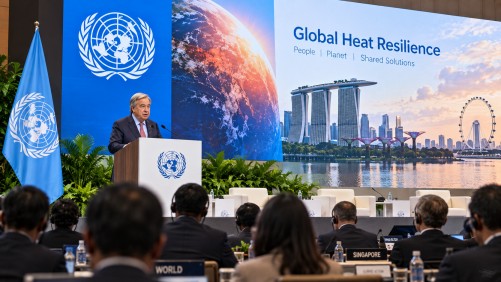
As global temperatures continue to rise, causing increasingly frequent and severe heatwaves, the international community is searching for solutions to mitigate the impact on vulnerable populations. In response to these growing challenges, the United Nations has announced the development of a comprehensive Global Heat Resilience Roadmap aimed at helping countries enhance their capacity to withstand extreme heat.
The roadmap, unveiled during a four-day forum in Singapore attended by representatives from over 60 countries, will guide nations in safeguarding critical sectors such as water and food supplies, healthcare facilities, schools, workplaces, and energy infrastructure. By encouraging improvements in building ventilation, urban tree coverage, shaded public areas, and energy-efficient cooling systems, the initiative seeks to bolster national heat resilience efforts and reduce the environmental footprint of escalating air-conditioning demand.
Currently, cooling systems consume approximately 20% of global electricity, and this demand is projected to more than triple by 2050. UN officials emphasize the urgent need for countries to develop robust policies, secure financing, and establish emergency plans to tackle the challenges posed by extreme heat. The roadmap will also feature mechanisms to monitor progress and evaluate the efficacy of national strategies, ensuring accountability and adaptability to local conditions.
Singapore, a country already taking proactive steps, has established a Heat Resilience Policy Office to centralize heat-management initiatives. The city-state plans to open over 300 cooling centers during heatwaves and has implemented energy-efficiency standards for air conditioners, leading to notable improvements in cooling efficiency. These efforts reflect the broader objectives of the UN’s roadmap, which aims to build on existing national heat-resilience plans and provide countries with a structured approach to developing and implementing tailored measures over the coming years.