

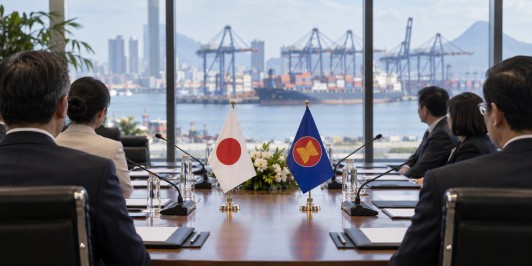
In response to the growing challenges facing global supply chains and the advancing role of artificial intelligence, Japan and the Association of Southeast Asian Nations (ASEAN) have agreed to explore enhancements to their economic partnership. This decision came during a meeting of economic ministers held in Manila on September 20, underscoring the importance of adapting to current economic dynamics.
The dialogue between Japan and ASEAN focused on revising their existing economic agreement to bolster supply-chain resilience, ensuring energy security, and integrating artificial intelligence more effectively into the economy. This initiative comes amid disruptions in key supply routes in the Middle East, which have prompted both parties to prioritize stable energy provisions.
Japan emphasized its commitment to supporting ASEAN countries in strengthening their oil stockpiles as a strategic move to enhance regional energy security. This cooperation is crucial in the context of ongoing geopolitical tensions and uncertainties in global trade, highlighting the necessity for closer economic ties.
Established in 2008, the Japan-ASEAN economic partnership agreement has evolved to include trade in services and investment, reflecting the deepening economic ties between the two regions. The economic relationship is substantial, with two-way merchandise trade reaching $245.4 billion in 2025 and Japanese investments in ASEAN totaling $9.5 billion.
As both parties continue to navigate the complexities of the global economy, the initiative to update their economic partnership agreement signifies a proactive approach to addressing future challenges and opportunities. The focus on supply-chain resilience, energy security, and artificial intelligence represents strategic areas that are increasingly critical in today’s interconnected world.