

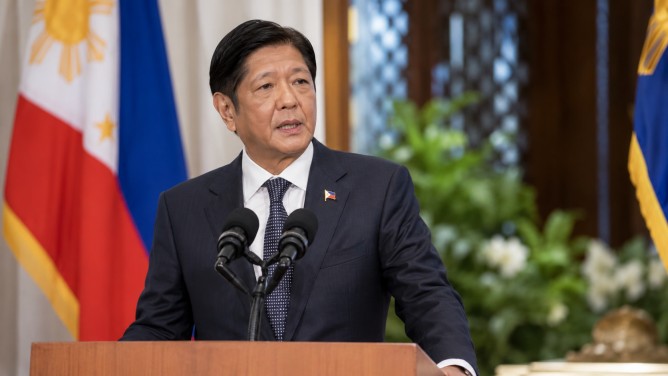
Tensions between the Philippines and China have intensified following remarks from the Chinese ambassador to the Philippines, Jing Quan, which were perceived as threatening. In response, Philippine President Ferdinand Marcos Jr. announced that he plans to meet with the ambassador to address comments suggesting that China could easily prevail in a conflict through the use of force. This development adds to the ongoing maritime disputes between the two countries in the South China Sea.
The Philippine Department of Foreign Affairs has criticized the ambassador’s remarks, interpreting them as an implied threat that could potentially damage diplomatic relations. The department urged restraint in public statements, emphasizing the importance of avoiding language that might erode mutual trust or hinder constructive dialogue between the nations.
In contrast, the Chinese Embassy defended Ambassador Jing’s comments, clarifying that Beijing does not intend to use force and prefers to maintain peaceful relations. The embassy called for both countries to engage in discussions to manage their disagreements and avoid actions that might escalate tensions.
The exchange of remarks underscores the complexities of the maritime issues in the South China Sea, where both countries have asserted territorial claims. While dialogue has been highlighted as necessary by both sides, the recent comments have introduced additional strain on the already sensitive bilateral relations.